Your island
for a while.
Bon bini na San Nicolas.Where you live, how your week looks, what the island is like and who has your back. Everything you want to know before you pack.
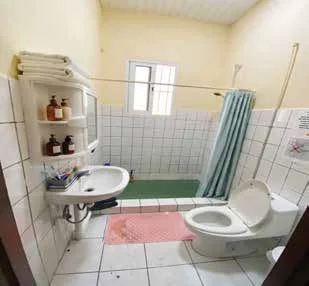
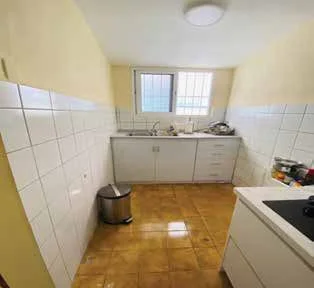
Your home: Casa Arena
A shared volunteer house on the main street of San Nicolas, a short walk from ArtisA Gallery and Space21. It hosts up to four volunteers, and because accommodation is expensive, you share a room. It is fully equipped for comfortable, communal daily living.
ArtisA provides
- Pillows, bedding and towels
- Kitchen utensils and basic cookware
- A diving mask for your whole stay
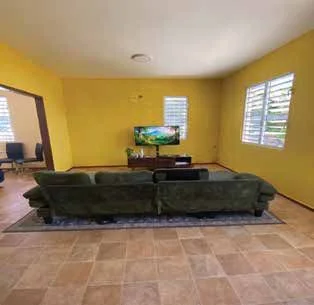
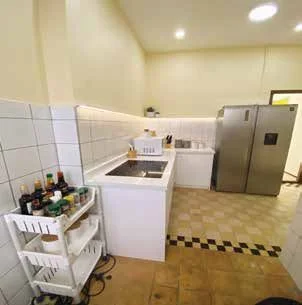
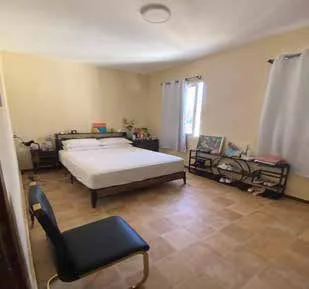
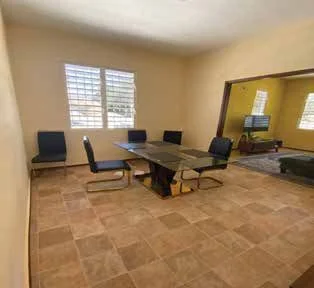
House rules
- The house is a shared space: everyone keeps it clean and tidy.
- Clean the kitchen, fridge, bathroom and living spaces after use.
- Respect each other's privacy, rest and personal boundaries.
- No illegal drugs, ever, in the house or during ArtisA activities.
- Smoking only outdoors; alcohol in moderation.
- Guests only with prior approval.
- Take care of the house, the furniture and the keys, and report any problem quickly.
What you receive
Every volunteer gets a food allowance and pocket money, by European Solidarity Corps rules. On scheduled days you also have lunch and dinner together at ArtisA, and transport for project activities is covered.
Everything is walkable
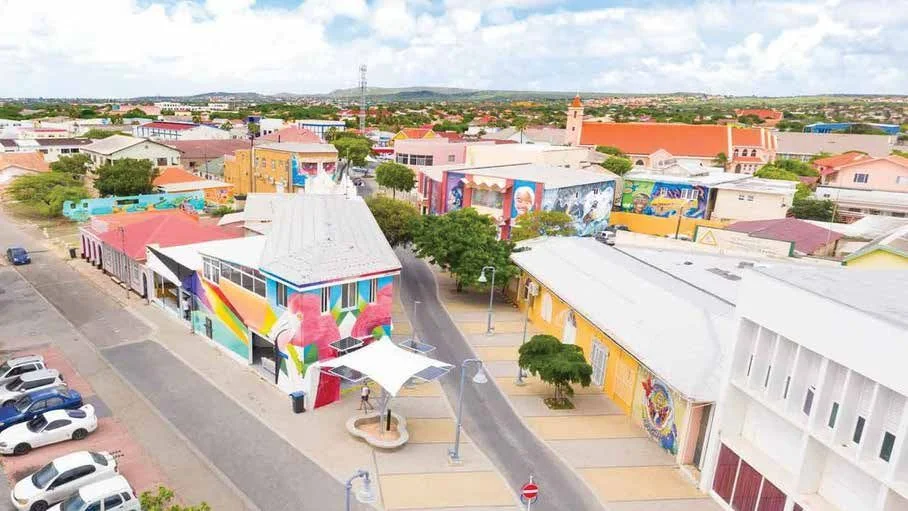
Once the most local part of Aruba, and for years avoided by tourists, San Nicolas is today, thanks to ArtisA's work, one of the most interesting and authentic parts of the island.
- ArtisA Gallery, Space21 and Casa Arena are close to each other.
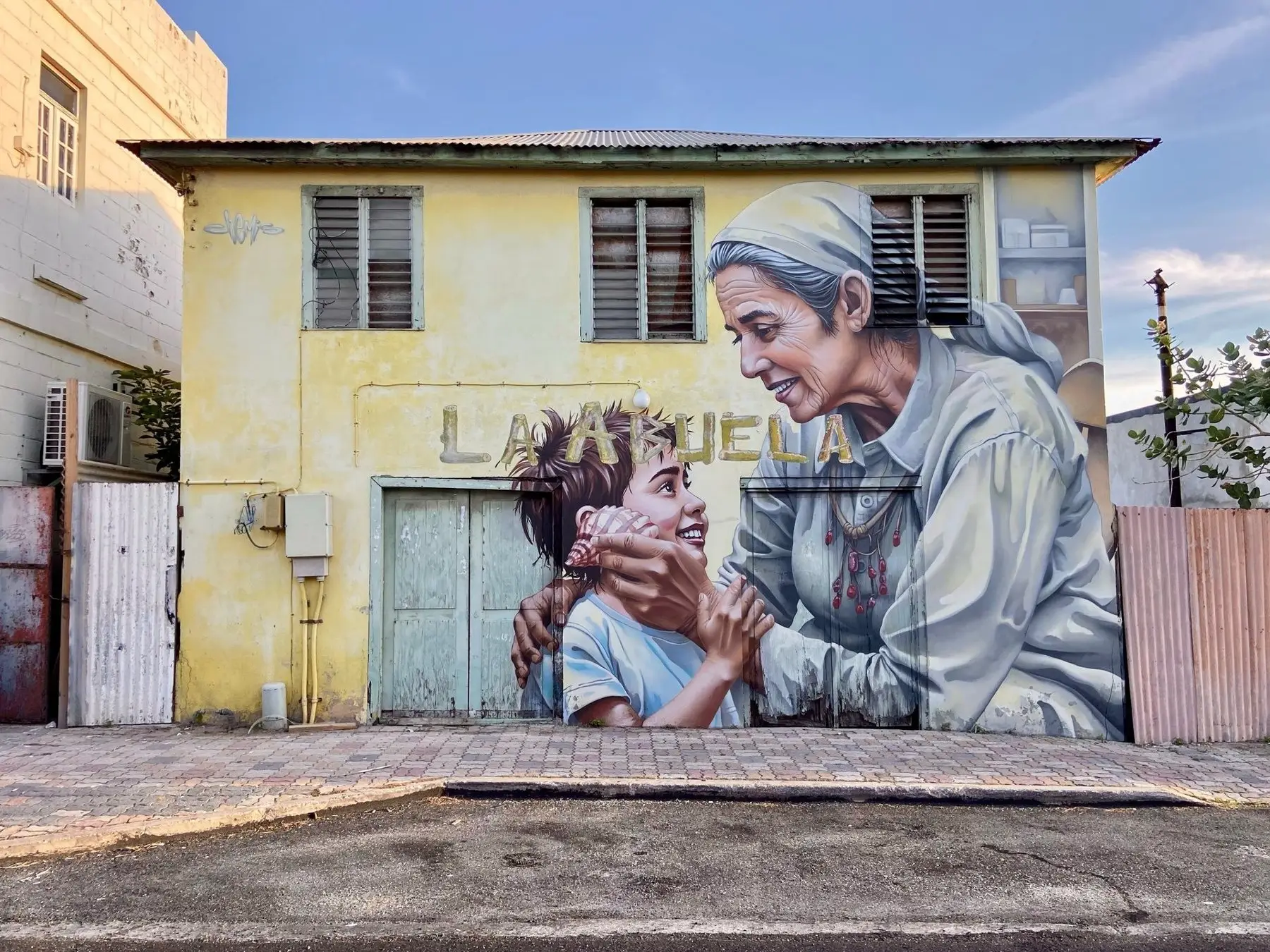
- The mural tours run all around the main street.
- Art-X-Plosion's after-school workshops are at Filomena College, about 5 minutes on foot.
- Art Week Aruba happens on the main street.
- A cinema is right across from Casa Arena, and the bus station is about 2 minutes away.
Eat nearby
Groceries
Supermarkets and grocery stores are about 5 minutes away by car.
Around the corner
The Museum of Industry, Theresita Church and the community pool are close by.
Work, rest and the island
European Solidarity Corps rules set your hours, days off and holidays. Your weekly schedule is made together with your mentor: first a draft while you try the different projects, then a final version that can still change with your learning goals and the short projects you want to join.
30 to 38 hours a week
Including your training and language learning.
Two days off in a row
Every week, usually the weekend.
Two holiday days a month
Plan them with us and explore the island.
A day could look like this
Open the gallery
Hang new work, welcome the first visitors.
Workshop
Help a class, a school group or an Art-X-Plosion session.
On the street
Mural photos, a tour, or prep for the next event.
Tell the story
Edit photos and post what happened today.
You are not on your own
Your mentor
Someone outside your daily work who checks how you are doing. Not your boss.
Our ESC coordinator
Your first contact for the project, the house and your plans.
Training and languages
Training before you leave and on arrival, and Online Language Support from the EU.
Insurance
Free from the European Commission: health, accident, liability, travel, personal injury and legal assistance.
Youthpass
A certificate that records what you learned.
A small island with a big personality
Aruba is a country within the Kingdom of the Netherlands, in the southern Caribbean about 29 km north of Venezuela. It became a separate country within the Kingdom in 1986. The capital, Oranjestad, is about 30 minutes by car from San Nicolas, which many call the island's second city.
Arubans come from many backgrounds and most speak several languages: you will hear Papiamento, Dutch, English and Spanish, often in the same conversation.
Aruba, right now
Live from San Nicolas: what it feels like outside at this moment, and the things to know before you land.
Weather: Open-Meteo · local time in Aruba (UTC−4, no daylight saving)
Dry and sunny
Outside the hurricane belt. Rain comes in short showers, mostly Oct–Jan.
4 languages
Papiamento and Dutch are official. English and Spanish are spoken everywhere.
Drink the tap
Tap water is desalinated seawater and safe to drink. Bring a reusable bottle.
110 V · US plugs
Type A and B sockets, like in the US. Bring an adapter.
Florin & dollar
The Aruban florin (AWG). US dollars are accepted almost everywhere.
911 · 100
911 for ambulance and fire, 100 for the police.
Sunny, dry and breezy
Warm all year with almost constant trade winds, so it feels cooler than it is. That makes the sun easy to underestimate.
Protect yourself
Sunscreen, a hat and water all day, even when the breeze feels mild.
Refill, don't buy
Aruba has no natural fresh water: WEB Aruba makes drinking water from seawater. Tap water is safe, so bring a reusable bottle.
After rain
More mosquitoes after rainfall. Bring repellent for the evenings.
From San Nicolas to the rest of Aruba
Aruba's public buses are run by Arubus. San Nicolas has its own main station in the town centre, so the whole island is within reach.
How to ride
- Lines L1, L2 and L3A run between San Nicolas and the main station in Oranjestad.
- For Eagle Beach and Palm Beach, change in Oranjestad to L10A, L10B or L10C.
- Line L2 also stops at the airport.
- Buses run less often in the evening: check the last bus home before you go.
Paying
Pay in US dollars or florins, with small bills. Retour cards, day passes and the Arubus smartcard are sold at the stations. Fares can change: check arubus.com.
Distances from San Nicolas
Transport for project activities is covered by the project.
Weekends, sorted
San Nicolas is on the quieter, wilder southeast side of the island. The best snorkelling is close by, and the desert national park is not far.
Calm turquoise lagoons about 10 minutes from the house. Bring the diving mask ArtisA gives you.
Almost 20% of the island is protected desert, with cacti, caves, rocky coast and old gold mines. Some spots, like the Natural Pool, are 4×4 only.
A limestone cave in Arikok with ancient drawings left by Aruba's first inhabitants, the same drawings that inspired the ECHO logo.
The famous white-sand beaches and hotel strip on the west coast. Take the bus via Oranjestad.
On the island's northwest tip, named after a ship wrecked nearby in 1891. Go at sunset.
A mangrove-lined cove on the south coast, popular with snorkellers.
Island life, all year
Carnival
Weeks of parades and music. Aruba's first Carnival parade was held in San Nicolas in 1954. Look out for the night-time Lighting Parade and J'ouvert, the pre-dawn pyjama street party in San Nicolas.
Flag & Anthem Day
Dia di Himno y Bandera, the national day, marking the adoption of the flag and the anthem "Aruba Dushi Tera" in 1976, with music, folklore and local food.
Art Week Aruba
San Nicolas's own art season: the Mural Festival, ArtTable, Art Fashion and the Aruba Art Fair on the main street. As a volunteer, you help make it happen.
A little Papiamento
Papiamento is Aruba's own creole language, with Portuguese, Spanish, Dutch, African and Arawak roots. Try these from day one.
Good to have on hand
Money
The Aruban florin (AWG) is the local currency, but US dollars are accepted everywhere. Bring an international credit card and keep some cash for buses and small shops.
Health
Dr. Horacio Oduber Hospital, Oranjestad: +297 527 4000 (24/7 emergency room)
Medical Centre San Nicolas: +297 524 8833
Your European Solidarity Corps insurance covers you.
Emergencies
911 ambulance and fire
100 police
Save these numbers and the house address in your phone when you arrive.
Bring this
- A laptop (required)
- Black pants and a black shirt or blouse, for some events
- One nice outfit for formal or special events
- A plug adapter (type A/B)
- Sunscreen and a hat
- Rock shoes for the beach
- An international credit card
ArtisA is a gallery: dress classy, professional and comfortable. Dresses, shirts or blouses and long pants are perfect. No tank tops, shorts, short skirts or flip-flops. You get ArtisA T-shirts for some activities.
Aruba's online immigration form is mandatory. Fill it in during the week before your flight; it includes Aruba's $20 visitor entry fee, which helps protect the island's nature. We tell you exactly what to fill in.
What will your echo be?
Pick a call, send your application and we will meet you online.